


Highlight of the JRCS International Activities in FY 2025 - Summary Part 2: Building a More Resilient Future
Around the world, conflicts and disasters continue to occur one after another, and the impacts of climate change are further compounding these challenges. As a result, humanitarian crises are increasingly becoming protracted and complex.
In the face of these harsh realities, the importance of strengthening people’s ability to prepare for crises and overcome adversity—known as resilience—has never been greater.
The Japanese Red Cross Society (JRCS) works in close cooperation with Red Cross and Red Crescent Societies around the world, alongside local communities and volunteers, to deliver medium- to long-term development cooperation.
Through a wide range of initiatives—including disaster preparedness, livelihood recovery support, climate change adaptation, and the promotion of first aid—JRCS strives to protect lives and health, while fostering communities that can stand on their own and sustain themselves into the future.
Launch of the “Djibouti Forest Project”
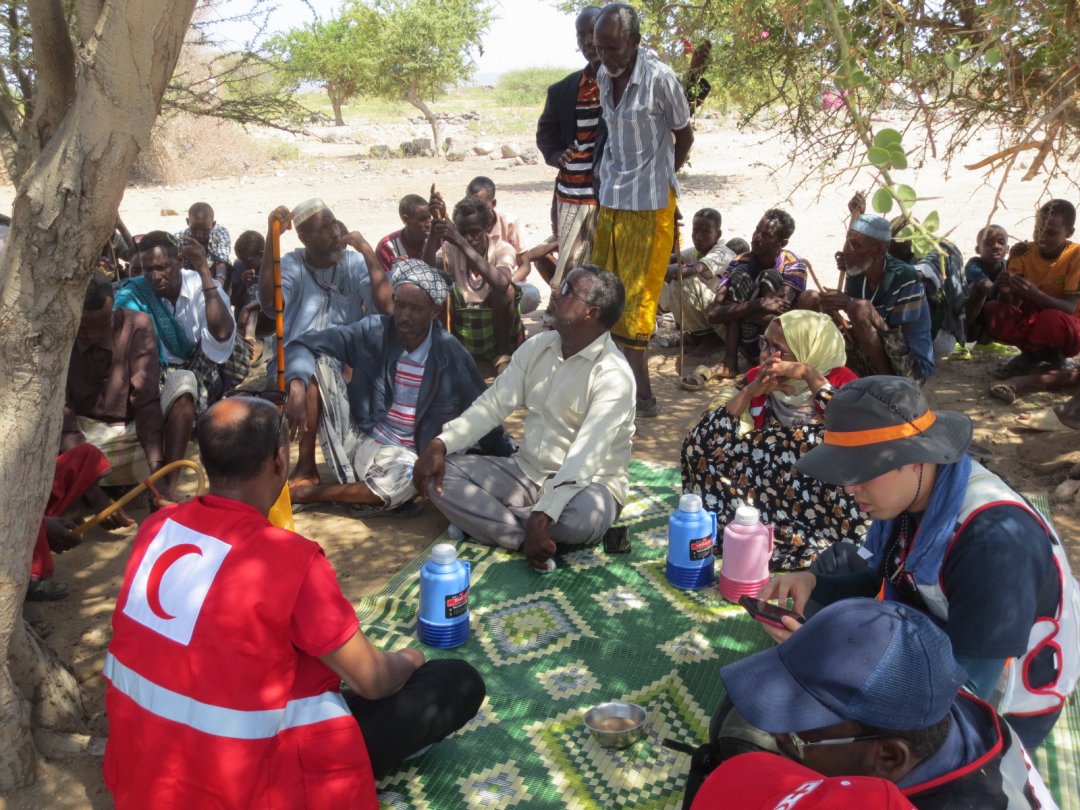 A staff member of the Djibouti Red Crescent Society explaining the project activities to local community
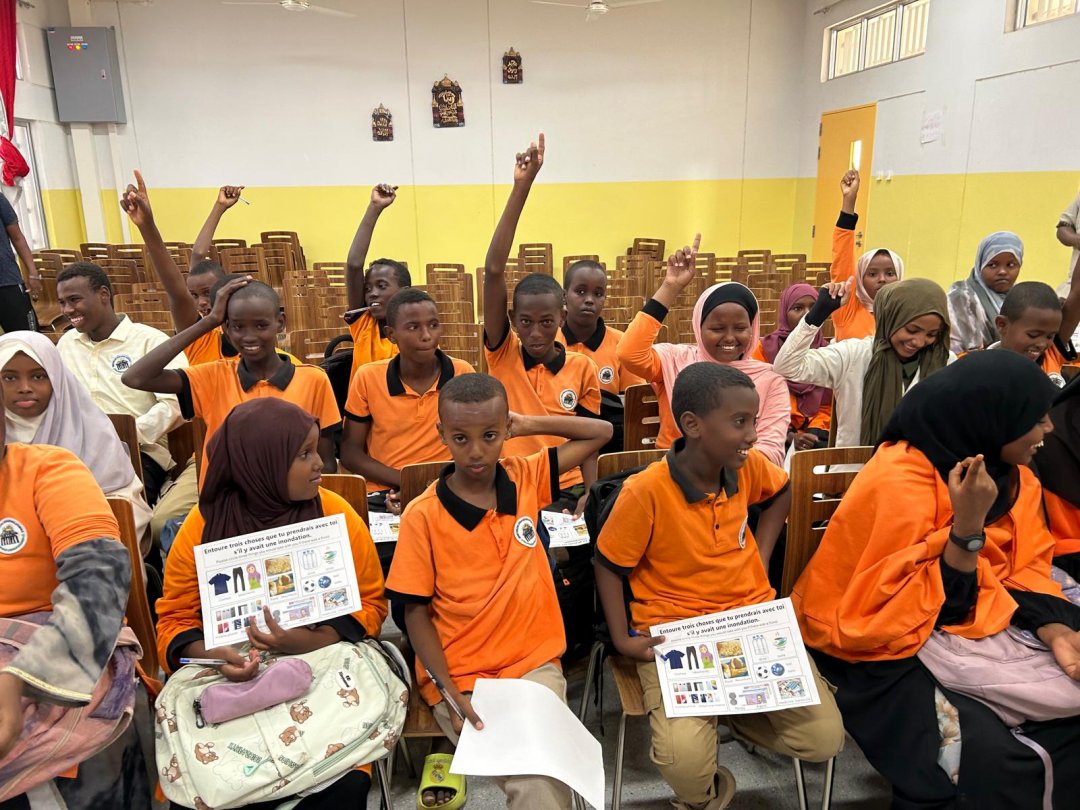 Red Cross Club members who will be engaged in tree-planting activities at the school
In 2025, the JRCS, in partnership with the Djibouti Red Crescent Society, launched the “Djibouti Forest Project” (officially titled “Strengthening Climate Resilience, Protection of the Environment, and Supporting Sustainable Livelihoods in Local Communities in Djibouti”).
Djibouti, which has recorded extreme temperatures as high as 71.5°C, is severely affected by climate change. Prolonged droughts and land degradation have intensified water scarcity and food insecurity, posing serious threats to the livelihoods of local communities. In addition, refugees and migrants from neighboring countries passing through or staying in Djibouti on their way to the Arabian Peninsula have led to a sharp increase in demand for food and basic livelihood support across host communities.
In response to these challenges, the project supports the creation of a sustainable living environment through tree planting, the development of water supply facilities, the introduction of household vegetable gardens, and the promotion of environmental conservation activities.
Following the launch of the project, two staff members from the Aomori and Nara Chapters of the JRCS visited the project sites, where they held discussions with staff of the Djibouti Red Crescent Society and local residents to review project activities and consider future plans.
Looking ahead, Red Crescent volunteers, schoolchildren, and community members will take the lead in tree planting and community-led environmental conservation initiatives, working together to build communities resilient to the impacts of climate change. JRCS will continue to support these efforts through technical guidance and capacity-building initiatives.
“Don’t Forget Afghanistan” — Five-Year Support for the Future
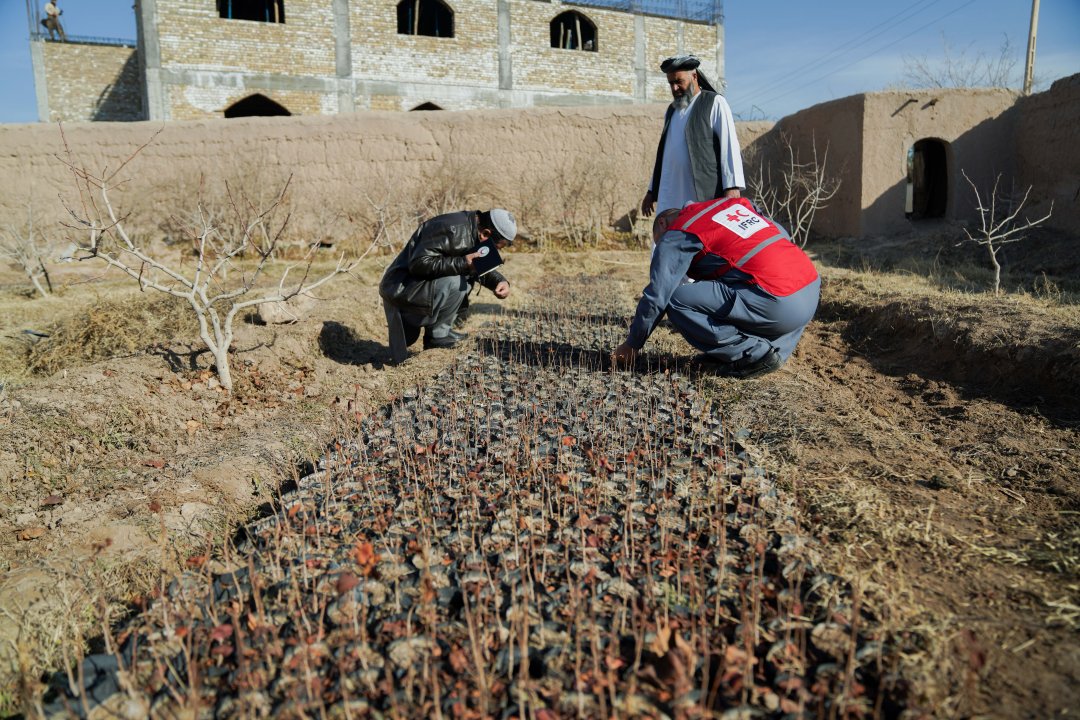 Staff of the Afghan Red Crescent Society and the IFRC staff procuring tree seedlings for reforestation © IFRC
Since 2020, the JRCS has been implementing the “Strengthen Community Resilience &Climate Change Project in Afghanistan” in partnership with the Afghan Red Crescent Society. The first phase of this five-year project was completed in June 2025.
Afghanistan continues to face severe challenges as ongoing conflict, political instability, and recurrent droughts have placed many people at risk of losing their livelihoods. Strengthening resilience to natural disasters and reinforcing the foundations of daily life remain critical issues.
During the first phase, activities were carried out in Herat and Samangan Provinces, focusing on tree planting, livelihood support, and disaster risk reduction. Income-generation support through the distribution of seedlings and fruit tree cultivation was complemented by vocational training and income-generating activities for female-headed households, resulting in confirmed income increases in many households. In addition, disaster preparedness activities involving schools and local communities improved understanding of evacuation procedures and disaster readiness.
In October 2025, the second phase of the project began, with support continuing in Herat and Takhar provinces. Building on the achievements and lessons learned from the first phase, the JRCS will continue to work closely with the Afghan Red Crescent Society to provide integrated support combining tree planting, livelihood assistance, and disaster risk reduction. Through these efforts, the project aims to enhance the stability of daily life and strengthen preparedness among communities facing the growing impacts of climate change.
Rwanda “Model Village Project” — Building Communities Resilient to Poverty and Disasters
Since 2019, the JRCS has been implementing the Model Village Project (officially titled Empowering Vulnerable Communities towards their Resilience in Rwand) in partnership with the Rwanda Red Cross Society. (A message from the former Country Representative of the Delegation in Rwanda is available here.)
The year 2025 marks an important milestone, with the completion of Phase I (2019–2025) and the launch of Phase II (2025–2030) of the project.
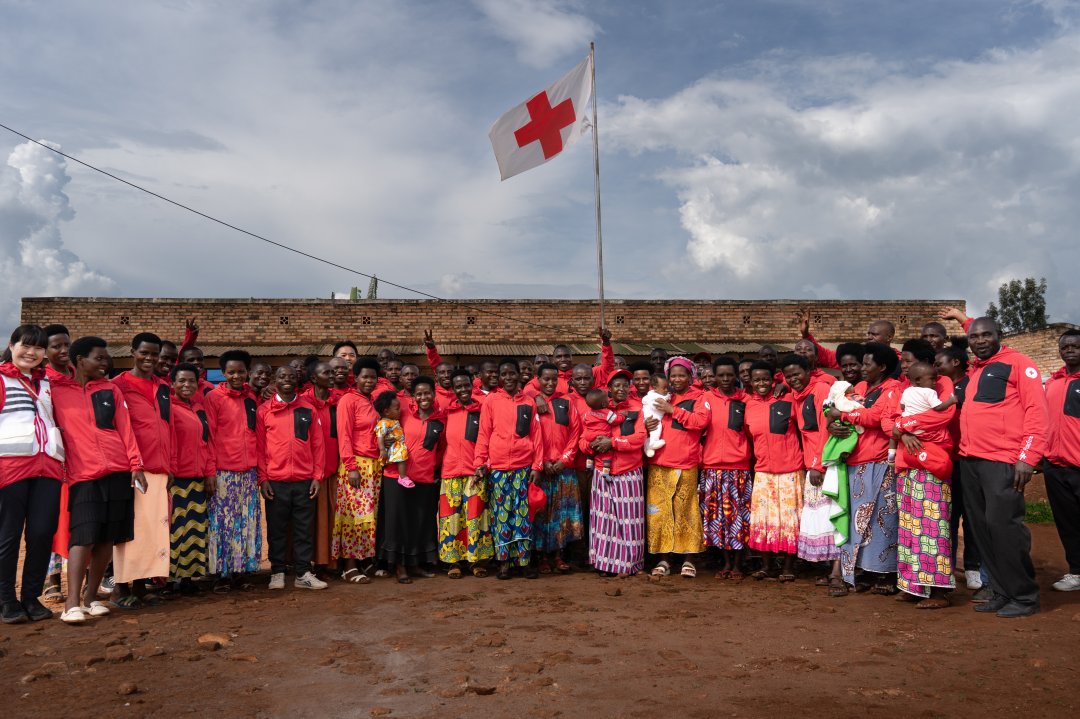 Red Cross Volunteers Supporting Community Activities
During Phase I, comprehensive support was provided to five villages in Gisagara District in southern Rwanda across the areas of water and sanitation, health and nutrition, livelihood improvement, and environmental conservation and disaster risk reduction. Through this integrated approach, communities have worked proactively to build villages that can withstand poverty and disasters.
As a result, water supply facilities were installed at 11 locations in the target area. The time women and children previously spent fetching water—often more than two hours per day—was reduced to an average of just 10 minutes, significantly improving daily living conditions.
In addition, the construction of 586 safe and sanitary household latrines eliminated open defecation, leading to substantial improvements in the overall hygiene environment of the communities.
In many households in the target area, families were previously able to eat only one meal per day, adversely affecting children’s growth and development. Through this project, home gardens were introduced to all 900 households in the five villages, enabling families to grow beans and vegetables throughout the year. As a result, nutritional status improved, and the number of children suffering from severe malnutrition dropped to zero.
The achievements and lessons learned during Phase I will be carried forward into Phase II, as community-led and sustainable village development continues in 10 new villages in Gisagara District.
“Kids Cross Project” — Supporting the Healthy Growth and Education of Children in Africa
Through the Kids Cross Project, we provide essential support to children in sub-Saharan Africa while also working to strengthen the resilience of families and communities that support them. By doing so, we aim to ensure that each child can acquire the knowledge and skills needed to protect their own health and build a better future.
In October 2025, the JRCS nurses visited Eswatini and Zambia to observe project activities on the ground.
In Eswatini, the HIV prevalence remains critically high, with one in four adults living with HIV. Red Cross volunteers visit households in their assigned communities and carefully explain the importance of HIV testing and the significance of continuing treatment, taking into account people’s daily lives and values. Their careful and respectful engagement with community members was clearly evident throughout these visits.
In Zambia, severe droughts over the past two years have worsened water shortages, and many schools continue to struggle to secure drinking water for children. In addition, a large number of children have lost their parents due to HIV/AIDS and other causes, leading to persistent school dropouts. In response to these challenges, local Red Cross volunteers have been working closely with schools and local authorities to provide comprehensive support across multiple areas, including education, health, water and sanitation, and climate change adaptation.
This project will continue to implement community-based activities aimed at improving the health, education, sanitation, protection, and dignity of children in Africa, as well as their families and community members.
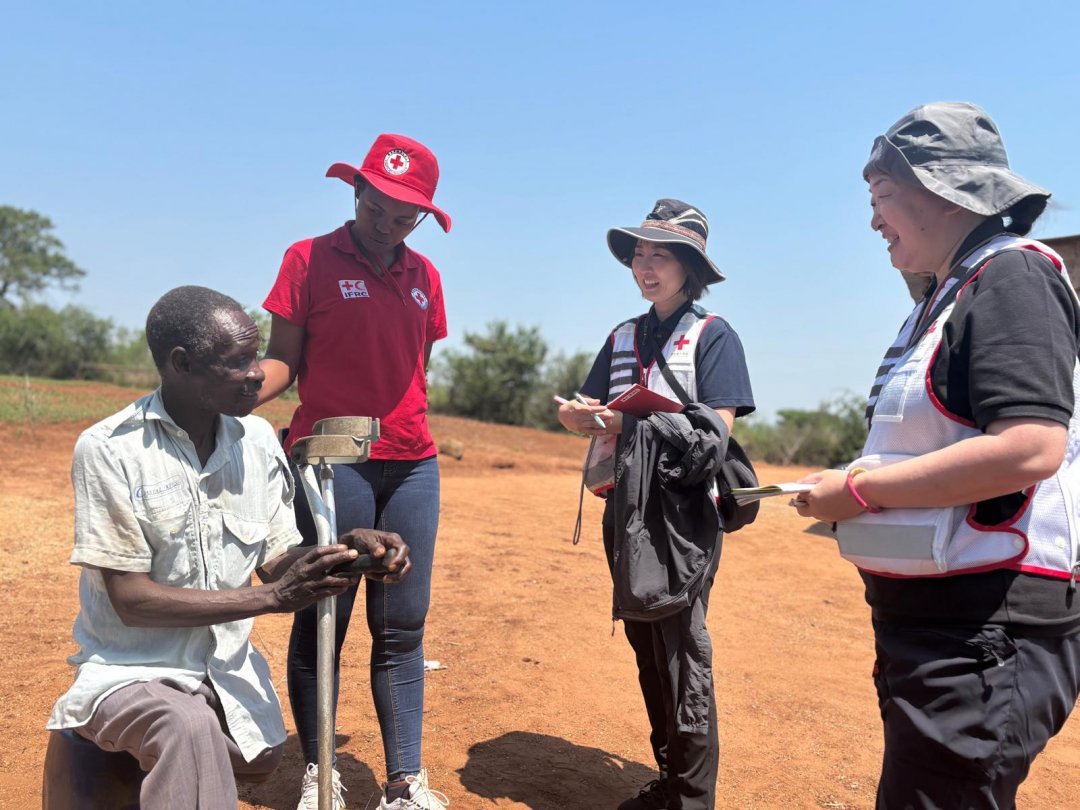 Conducting interviews with community members in Eswatini
Capacity-Building Support for the Mongolian Red Cross Society
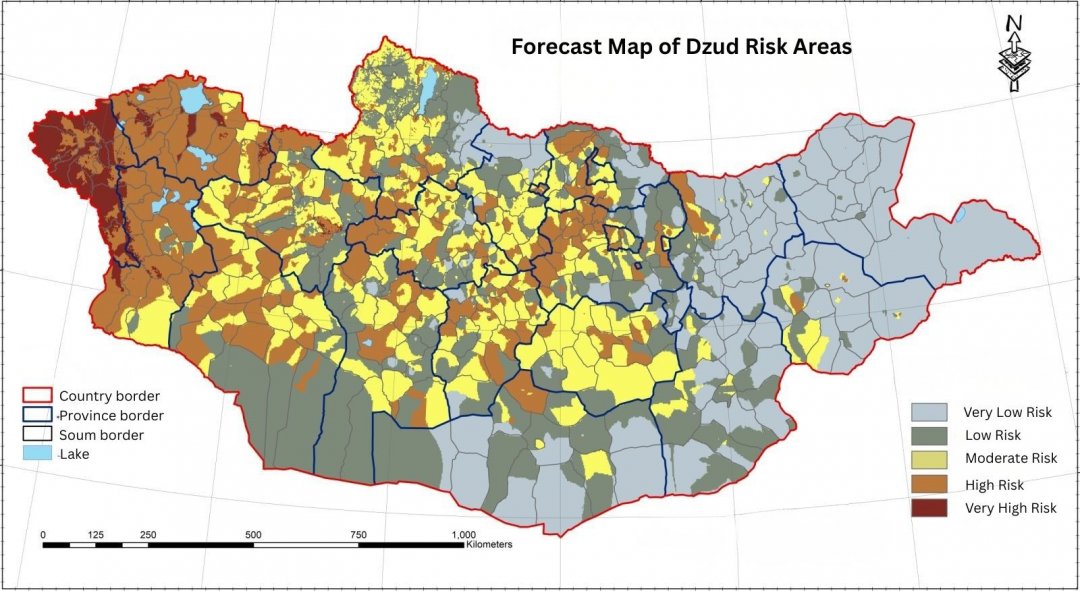 2026 Dzud Risk Map – Impacts are projected across the entire country (Risk levels increase from light blue to red)© National Emergency Management Agency (NEMA), Mongolia
Mongolia has been severely affected by climate change–related disasters, including extreme cold waves and heavy snowfall known as “dzud.” In the winter of 2023, approximately 180,000 households were affected by dzud, and in the winter of 2024, an estimated 8.1 million livestock, equivalent to 14% of the country’s total, perished nationwide, causing devastating impacts on people’s livelihoods.
In areas affected by such natural disasters, strengthening systems to protect the health and safety of local communities remains a critical challenge.
In cooperation with the Mongolian Red Cross Society, the JRCS supports the training of instructors in psychological care and first aid, contributing to the strengthening of branch-level capacity in these areas.
As part of this support, two instructors from the Kagawa and Okinawa Chapters of the JRCS traveled to Mongolia to conduct first aid training for branch staff of the Mongolian Red Cross Society. These initiative aims to establish a stronger nationwide framework for first aid, ensure the availability of essential equipment and materials, and ultimately enhance public awareness and practical first aid skills.
In the area of psychological care, training sessions were also held to share knowledge and experience on training management, and discussions took place on how to establish systems that enable the continuation of activities tailored to local needs. Through these initiatives, the foundations are being strengthened to enable local branches to carry out activities independently and sustainably.
The JRCS will continue to deepen its partnership with the Mongolian Red Cross Society to ensure that essential support is delivered consistently to communities across the country.
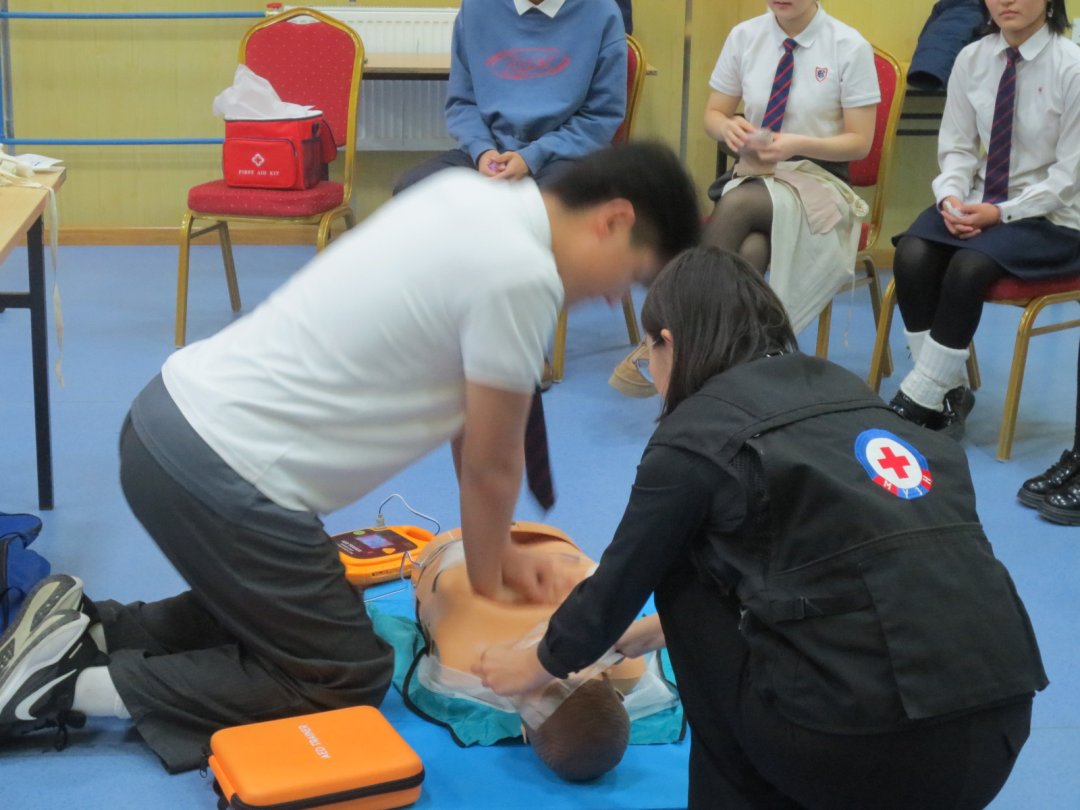 High school students attending a first aid training
Strengthening Disaster Preparedness in Indonesia Through Schools and Communities
In Indonesia, efforts are underway to strengthen disaster preparedness through close collaboration between schools and local communities.
In 2025, disaster preparedness training and educational materials were provided to approximately 200 teachers in Jember and Sukabumi districts on Java Island. Red Cross clubs were newly established in 12 schools, creating opportunities for children to learn about disaster preparedness as something directly relevant to their own lives. In addition, 124 community-based disaster preparedness volunteers were organized in 6 villages, where residents worked together to develop hazard maps and evacuation plans.
During the same period, heavy rainfall and strong winds that struck northwestern Sumatra in November caused flooding and landslides across multiple provinces. The Indonesian Red Cross Society immediately launched relief operations, and the Japanese Red Cross Indonesia Office supported the response by participating in field assessment teams to help assess the damage. Serious challenges related to healthcare and access to safe drinking water were identified, and this information was used to support international coordination of assistance and public communications.
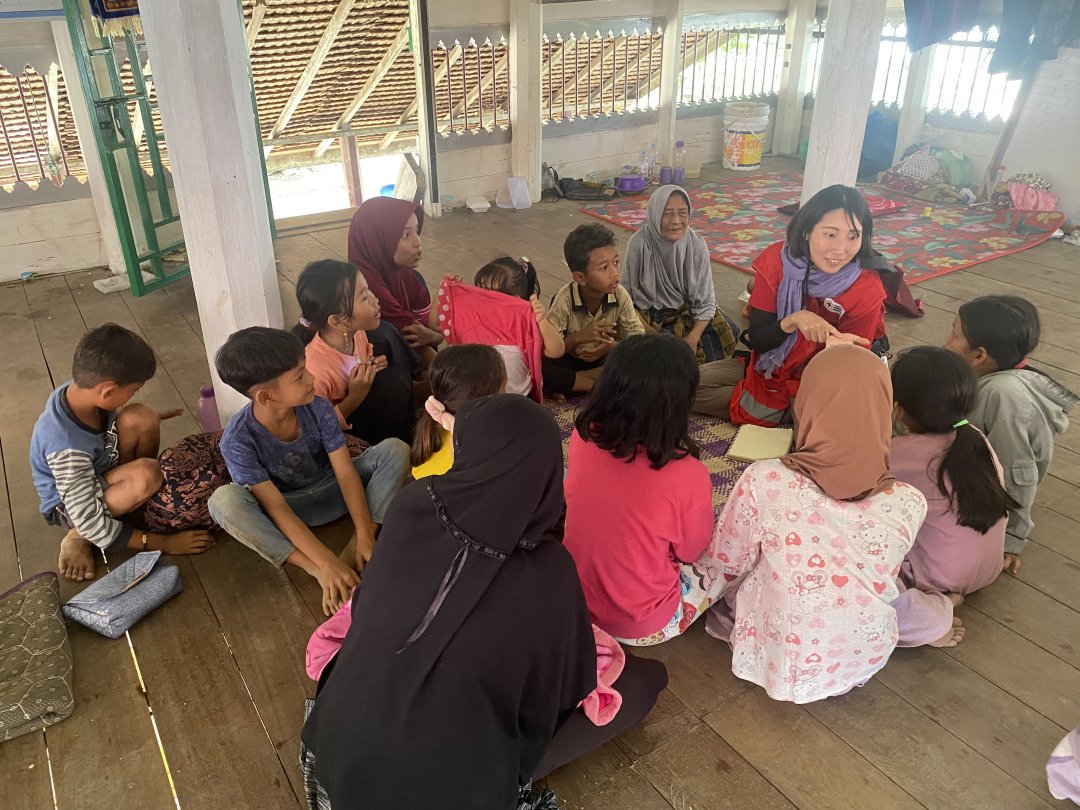 A Japanese Red Cross nurse conducting a health needs assessment in the disaster-affected area
Youth-Led Climate Action in the Pacific
In Pacific Island countries, climate change–related humanitarian challenges are intensifying, including difficulties in securing safe water and food and the spread of infectious diseases, driven by sea-level rise, droughts, and cyclones. The JRCS has been supporting the region since FY2023, and in FY2025, alongside relief efforts responding to dengue outbreaks and cyclone impacts, it worked to strengthen community-based climate action.
The youth-led climate action program “Y-Adapt” has expanded to seven countries, engaging more than 2,000 participants in activities such as coastal clean-ups and mangrove planting, benefiting approximately 10,000 community members.
In addition, a video contest was held to showcase volunteer activities across the Pacific. Youth representatives from four countries visited Japan, where they learned about disaster risk reduction and social welfare initiatives, while sharing the urgent realities of climate change with young people in Japan and calling for concrete action.
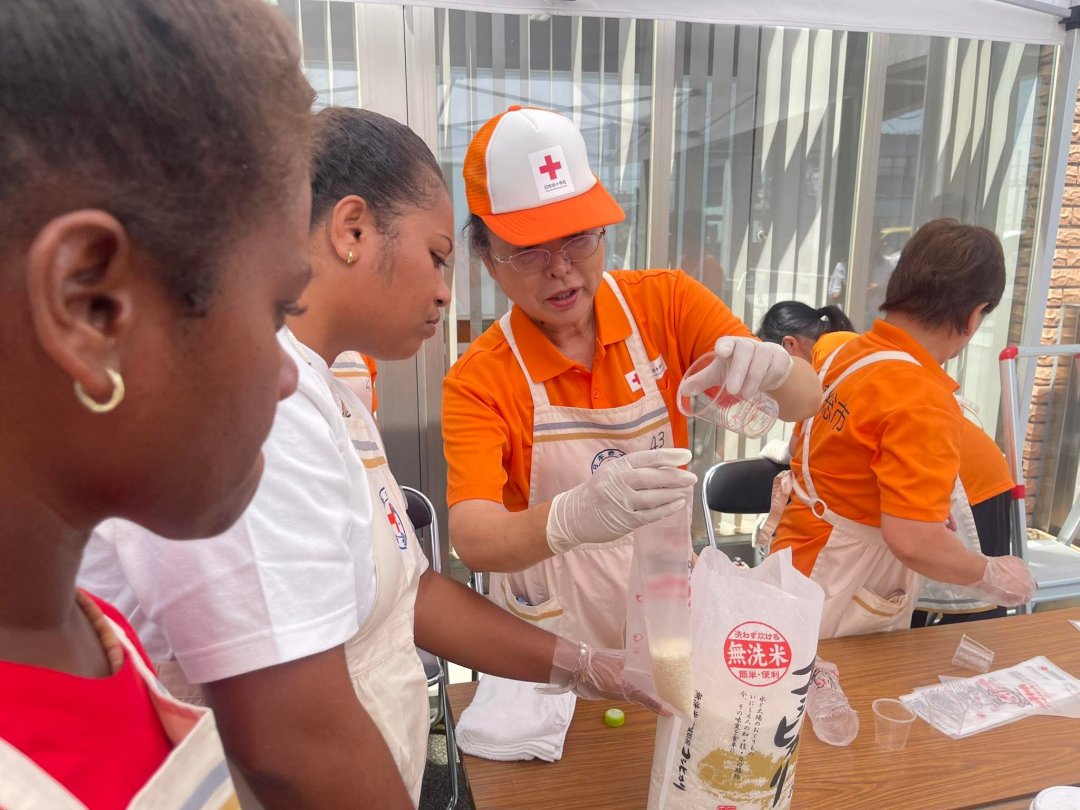 Learning inclusive cooking for people with special needs during a mass cooking drill with the Jōsō City Red Cross Volunteer Group
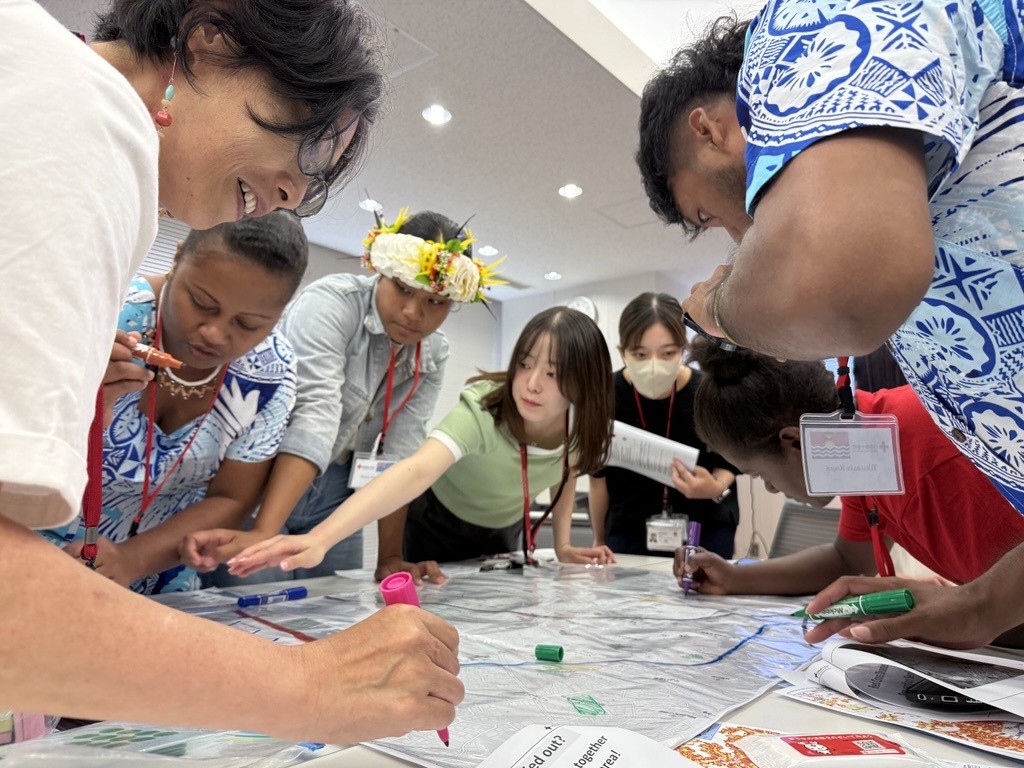 Experiencing a community disaster simulation exercise led by staff from the JRCS Kanagawa Chapter