


Highlight of the JRCS International Activities in FY 2024 - Summary Part 2: Long-term Project -
In 2024, conflicts and disasters continue to occur frequently around the world. The Japanese Red Cross Society (JRCS) is engaged in emergency medical relief activities while also providing long-term assistance to help people protect their health and safety and build resilience against various humanitarian crises during peacetime. These activities are primarily carried out by the local Red Cross and Red Crescent community volunteers. As global situations become more complicated and the impacts of climate change intensify, the role of development cooperation project is becoming increasingly important.
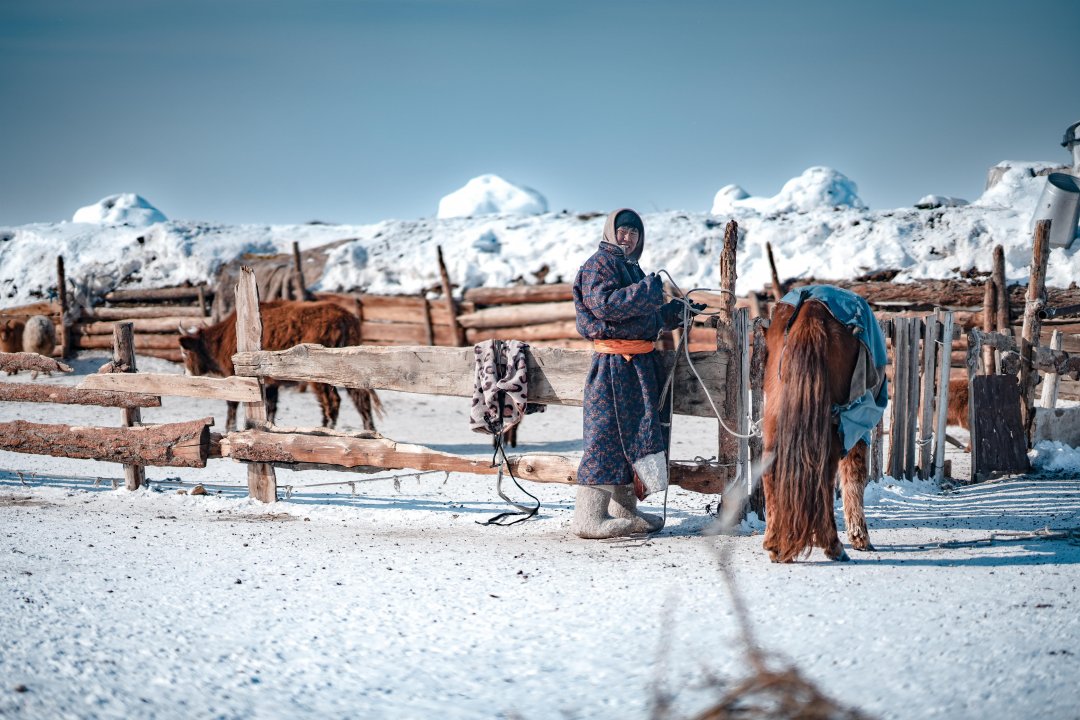
The cold wave “Dzud” due to climate change threatens the livelihoods of nomads in Mongolia © MRCS
Special Feature 1:Health support project in Mongolia
Mongolia, whose land area is four times of Japan’s, has a population that is only 2.5% of Japan’s (3.23 million), making it the least densely populated country in the world. Moreover, Mongolia has been severely affected by the accelerating impacts of climate change, particularly in rural areas. The community people and herder families who rely on agriculture and livestock for their livelihoods, are under threat, jeopardized their lives and health.
In the winter of 2023, a severe cold wave, known as the “Dzud,” caused the death of 8.1 million livestock, which accounts for 14% of the country's total. As a result, 246,000 people who depend on livestock have been affected (as of November 2024, according to the Mongolian authorities). Additionally, the Dzud disrupted access to public services such as education and healthcare, requiring communities to support one another and work together to overcome the crisis.
The Mongolian Red Cross Society (MRCS) has a network of its branches across Mongolia and is engaged in efforts to promote the health of people not only during disasters but also in peacetime. In response to the recurring Dzud crisis, it is focusing on strengthening emergency response capabilities, including the training of volunteers. In light of this situation, the JRCS has launched a new three-year health enhancement project in Mongolia from April 2024, embarking on this initiative together with the MRCS.
The project provides assitance to ensure the physical and mental health of people in harsh environments by strengthening the dissemination of first aid training and establishing the Mental Health and Psychosocial Support (MHPSS) system. In FY 2024, a total of seven JRCS staff members were deployed to share their skills and knowledge based on JRCS’s experiences. Specifically, they contributed to the emergency response during the Dzud, provided technical support for first aid training, and assisted in establishing the MHPSS implementation system.
From April 2025, as the second year of this project, the focus will be on training of first aid instructors and MHPSS personnel, as well as provision of the necessary equipment for ensuring sustainable health services of the MRCS.
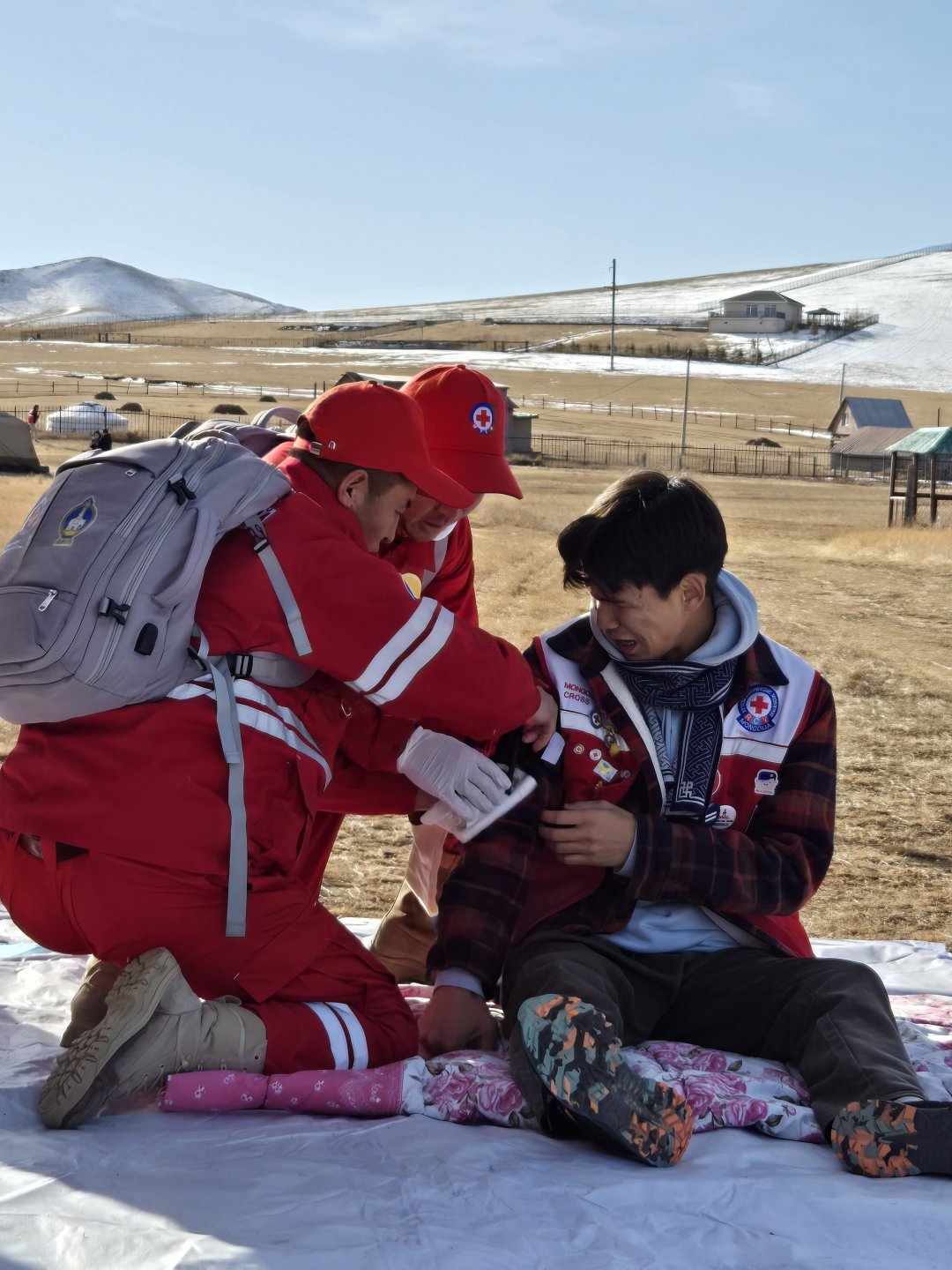
MRCS staffs providing first aid at a first aid competition © MRCS
Special Feature 2:Empowering vulnerable communities toward their resilience in Rwanda
Located in East Africa, Rwanda faces compounding challenges such as rural poverty, lack of clean water and sanitation, infectious diseases and natural disasters caused by climate change. The JRCS, together with the Rwanda Red Cross Society, has implemented the 'Community Resilience Empowerment Project' mainly through the Red Cross volunteers. The project has provided humanitarian assistance in many areas, including health, water and sanitation, livelihoods, education and environmental protection in Gisagara District, far from the capital Kigali.
In April 2024, a long-desired water supply facility was completed in the village, providing clean water to approximately 4,600 people. This has greatly reduced the heavy workload of women and children in fetching water, and the water station is carefully maintained by the local community. The project has also improved nutrition and increased schooling opportunities for impoverished children through the introduction of home gardens and group saving activities.
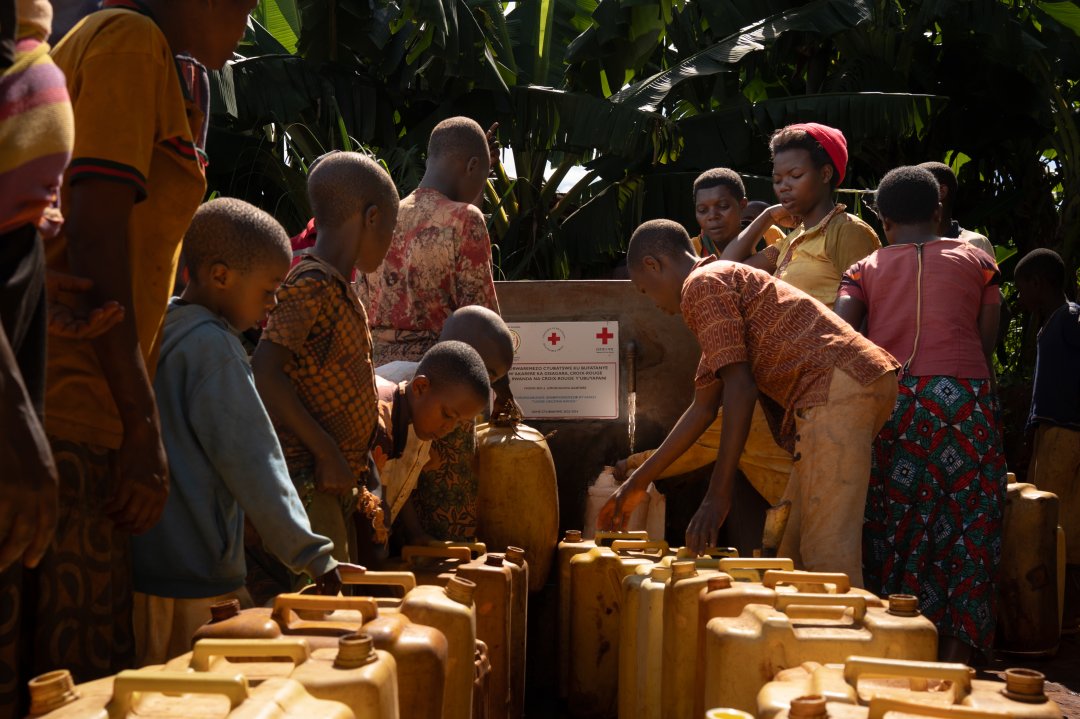
People waiting their turn at the newly completed water supply system in the village © JRCS
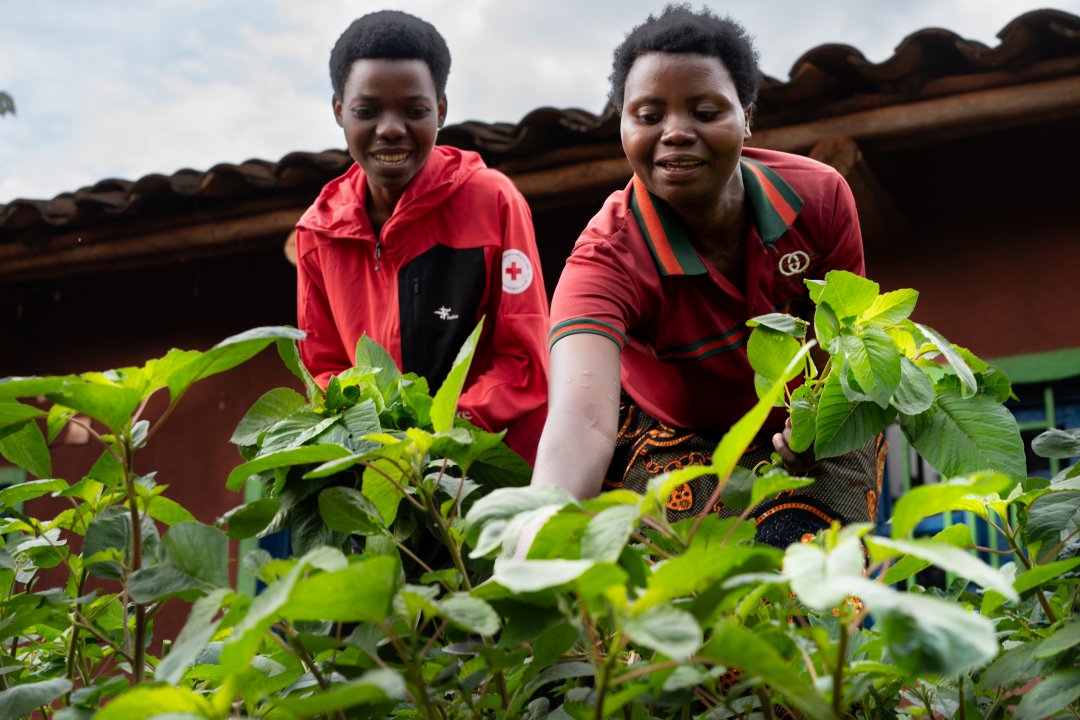
Red Cross volunteers monitoring a vegetable garden © JRCS
In addition to donations from general public, the project is supported by Japanese partner companies and other organizations. One example of this is the completion of water supply facilities with financial support from JAPAN STAR. Co, Ltd. TIEMCO Ltd. also donated 90 original jackets this year, boosting the Red Cross volunteers’ sense of pride and confidence.
The current phase of the project, which has been led by the Red Cross volunteers together with residents, will end in June 2025. However, the Red Cross volunteers will continue to take the lead in resolving humanitarian issues at grassroot level.
Community and school-based disaster resilience project in Indonesia
Indonesia is a disaster-prone country, but it does not have much disaster prevention infrastructure such as sea walls or tsunami towers. The JRCS is working with the Indonesian Red Cross Society (PMI) to build disaster resilient communities, particularly in southern Java, where the possibility of huge earthquakes and tsunamis has been identified, focusing on spreading disaster education in schools and disaster preparedness activities in villages (click here for the past initiatives).
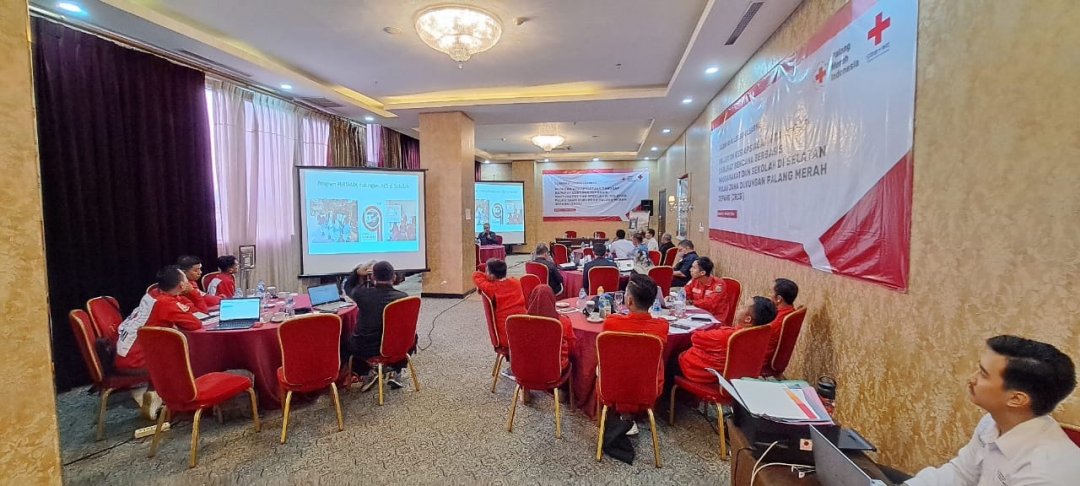
Closing workshop of the first phase of the project © PMI
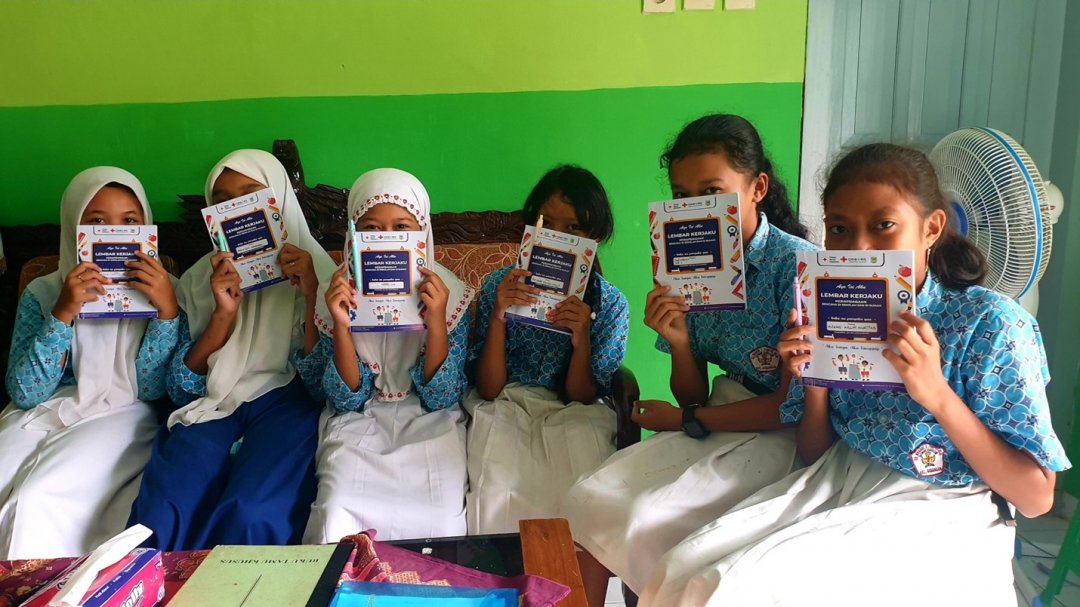
Pupils with their textbooks for disaster preparedness © PMI
The first phase of the project, covering the districts of Kebumen and Malang, was completed in December 2023, and a final evaluation was conducted in 2024. The evaluation results confirmed an increase in disaster awareness and changes in the behaviour of the residents, such as the preparation of emergency grab bags and furniture safety measures. On the other hand, the need for continued awareness-raising activities was also confirmed, as some people still held a local belief that “the sea goddess would protect us” and did not feel the need for disaster preparedness activities. Others fear that evacuation drills might attract disasters or believed that “it is fate to suffer a disaster, so we will not run away.”
To ensure that these lessons and outcomes are applied, discussions were held with PMI, and a new phase of the project was launched in November in Sukabumi and Jambar districts. The achievements and challenges of the first phase will be reflected to further strengthen disaster preparedness.
Strengthening community resilience to climate change in Afghanistan
As of 2024, Afghanistan has 23 million people-and more than half of the population- are in urgent need of humanitarian assistance (as of December 2024, according to the United Nations). The deterioration of women's rights in the country is challenging, with restrictions on women's education and public speaking. While many humanitarian operations have been constrained under the current circumstance, the Afghan Red Crescent Society (ARCS) remains the only humanitarian organization authorized to provide assistance nationwide, and it continues to support women. However, although the need is extremely high, international attention to Afghanistan has declined, and the support remains insufficient.
The JRCS has been implementing a five-year community resilience project since 2020, mainly on livelihood assistance, tree planting, and disaster risk reduction activities. In tree planting programme, there was a challenge due to the significant impact of drought and severe water shortage, which made it difficult for sapling to grow as expected. Therefore, in FY 2024, a total of 10 solar pumping systems for irrigation were installed in the project sites in Herat (8 units) and Samangan (2 units). The water quality of this system is good, and it not only helps to grow the saplings distributed, but also serves as drinking water for the local community (for other livelihood assistance and tree planting activities, click here).
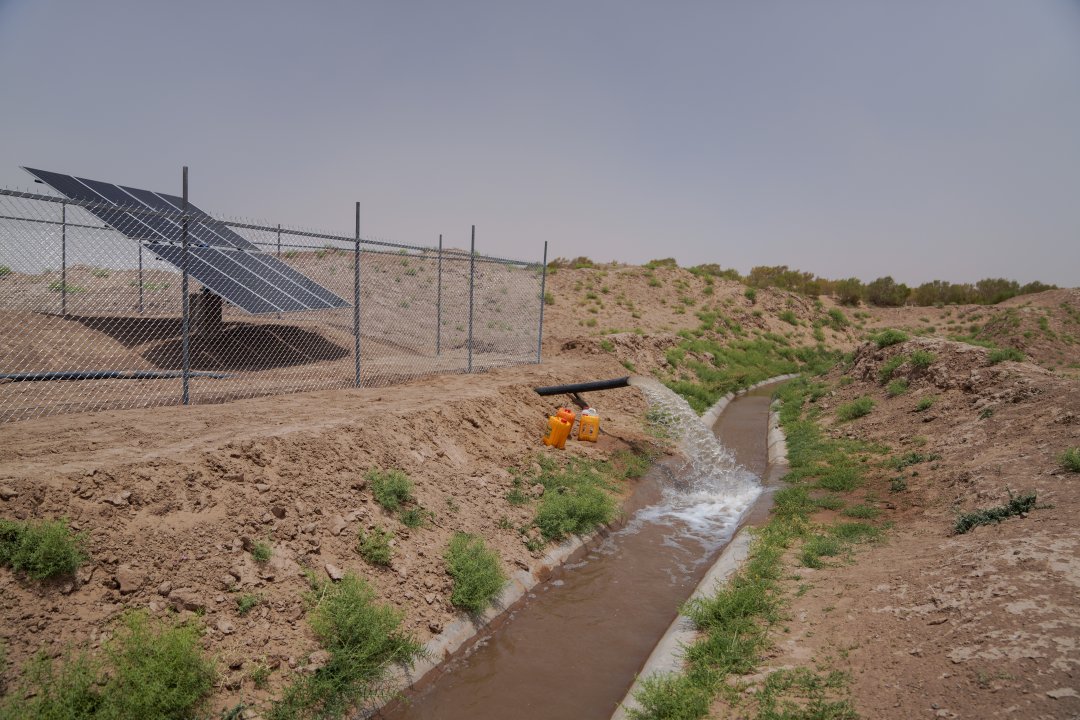
Solar pumping system installed for irrigation © IFRC
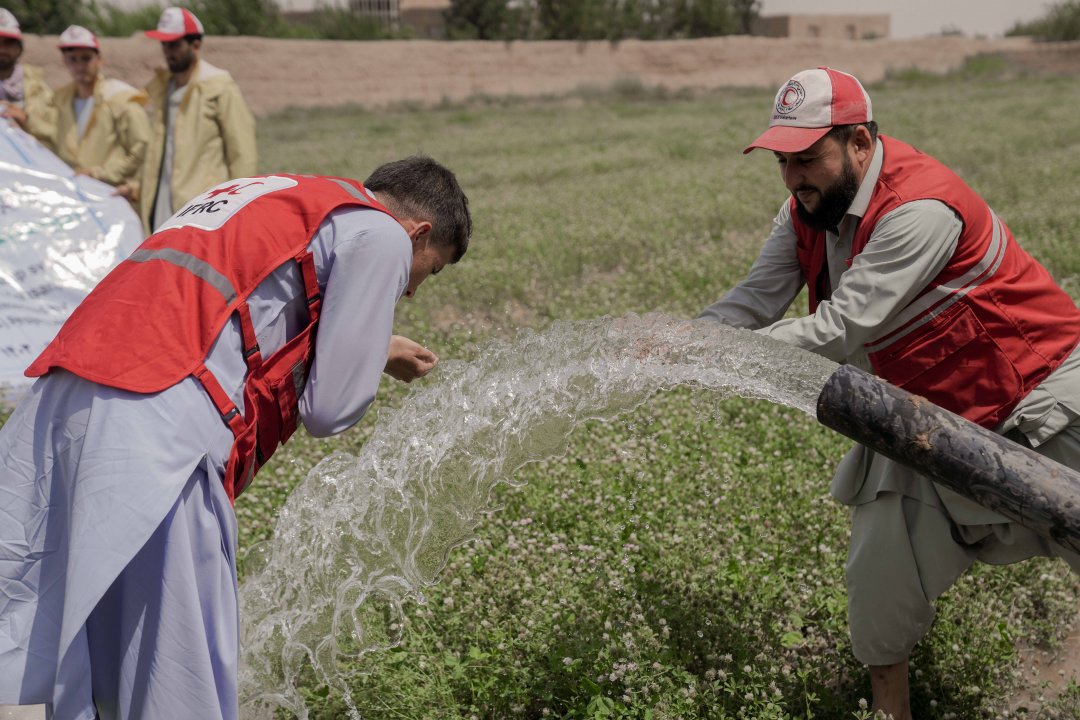
Green comes back to life on dry land © IFRC
Climate action project in the Pacific islands
Despite the image of a southern paradise, in recent years, the Pacific countries have suffered from rising sea levels, coastal erosion and ocean acidification, which have affected people's lives. Prolonged droughts and frequent cyclones are also causing serious damage.
Climate change training for youth (Y-Adapt) started supporting climate change action in 11 countries in the region from April 2023. In this project, Y-Adapt has been held in various locations in the region to give young people the opportunity to understand climate change and take action. The aim is to create a sustainable society that is resilient to climate change and promote grassroots initiatives that utilize the power and ideas of the younger generation. After completing the training, participants return to their countries and share the knowledge they have learned with their communities, who take the lead in identifying the impacts of climate change on their lives and local resources, planning adaptation measures that can be implemented by the residents themselves and undertaking actual activities.
For example, in Fiji, where improper waste dumping was blocking roads and drains and exacerbating flood damage, youth volunteers took the lead in installing bins, conducting regular waste collection campaigns and raising awareness about proper disposal methods. In Kiribati, the project also involved the construction of a rubbish dump on stilts to mitigate flooding caused by storm surges, the construction of breakwaters using local materials (bui bui), and cleanup activities.
In this way, the community people are thinking and continuing to work to reduce the damage caused by climate change as much as possible. Click here for a report from our field representative.
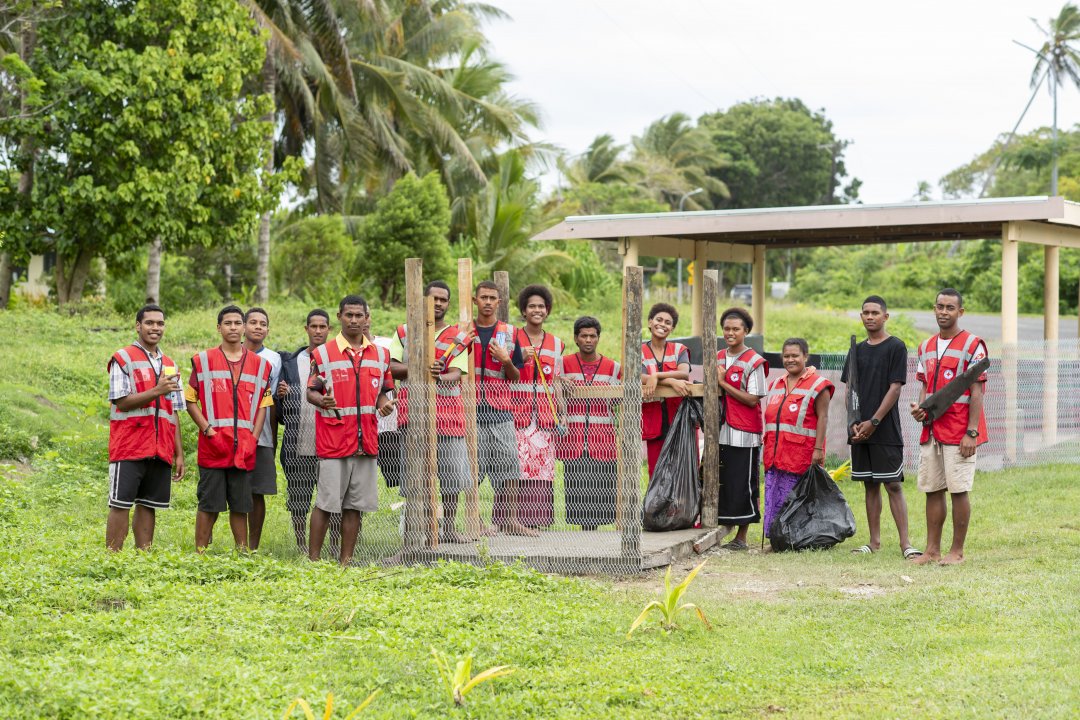
Fiji Red Cross Society Youth Volunteers. Construction of a rubbish dump © IFRC
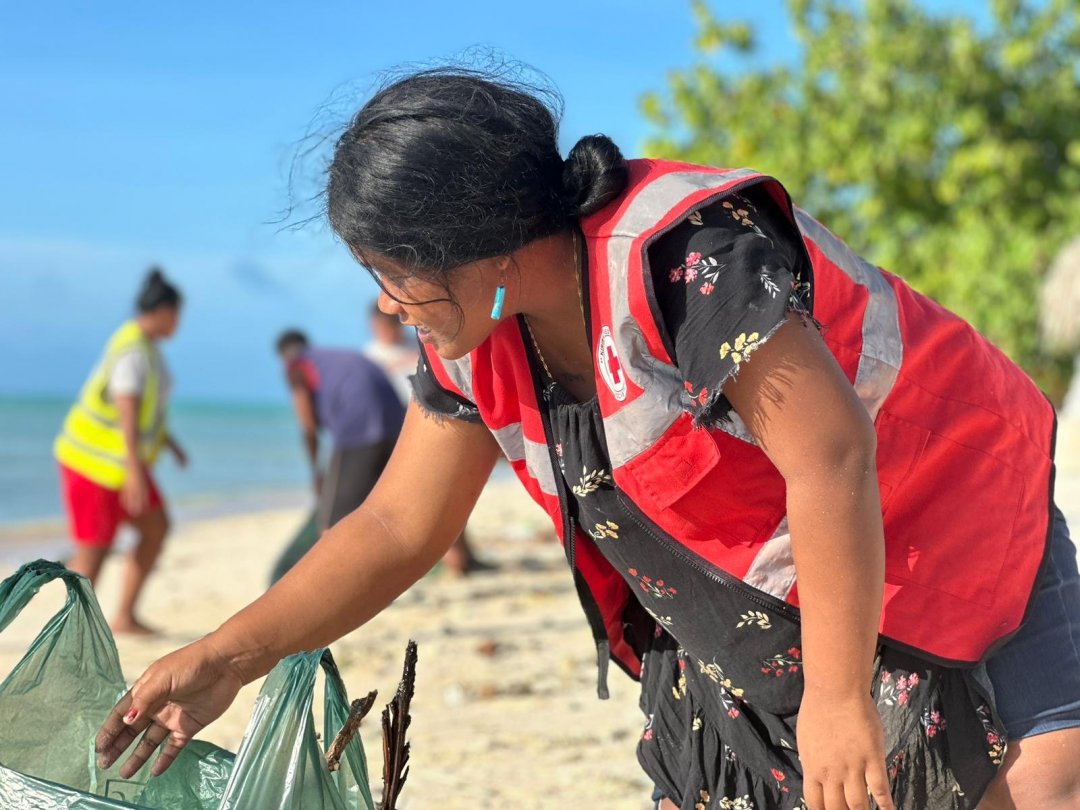
Kiribati Red Cross Society Youth Volunteers. Coastal clean-up © IFRC
Connecting Japan and the world through development cooperation
The JRCS development cooperation projects make use of the knowledge and skills of its branches and medical facilities located across Japan. For example, we dispatched nurses to Rwanda to support health-related activities, instructors for first aid training and Mental Health and Psychosocial Support (MHPSS) to Mongolia and other countries, and staff involved in disaster relief and mitigation efforts in Japan to Indonesia.
Meanwhile, in February 2025, project officers from Afghanistan and Rwanda, who had come to Japan for training courses, visited the JRCS Miyagi, Tokyo and Tottori Branches, to report on the activities supported by the JRCS and engage with children at Junior Red Cross member schools and Red Cross volunteers. Through those mutual learning exchanges, we aim to cultivate face-to-face relationship to support each other based on specific humanitarian needs and expand sustainable cooperation for the future.
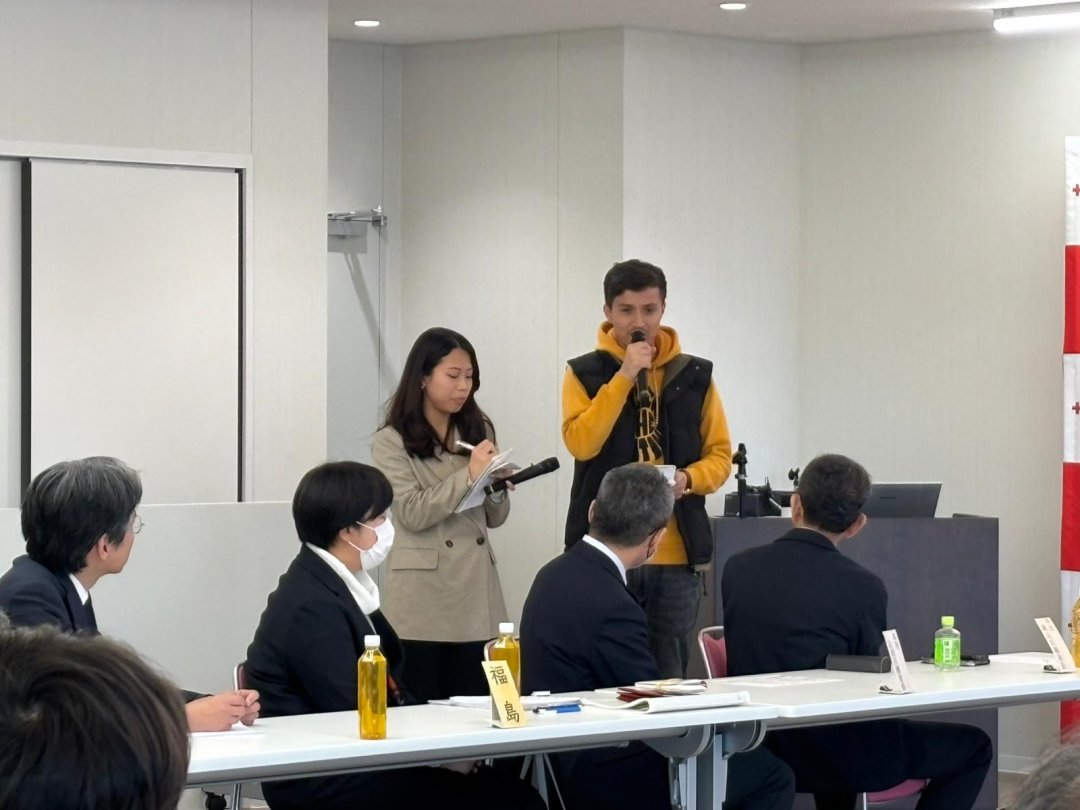
IFRC Afghanistan project officer reporting on activities at the Miyagi Chapter © JRCS
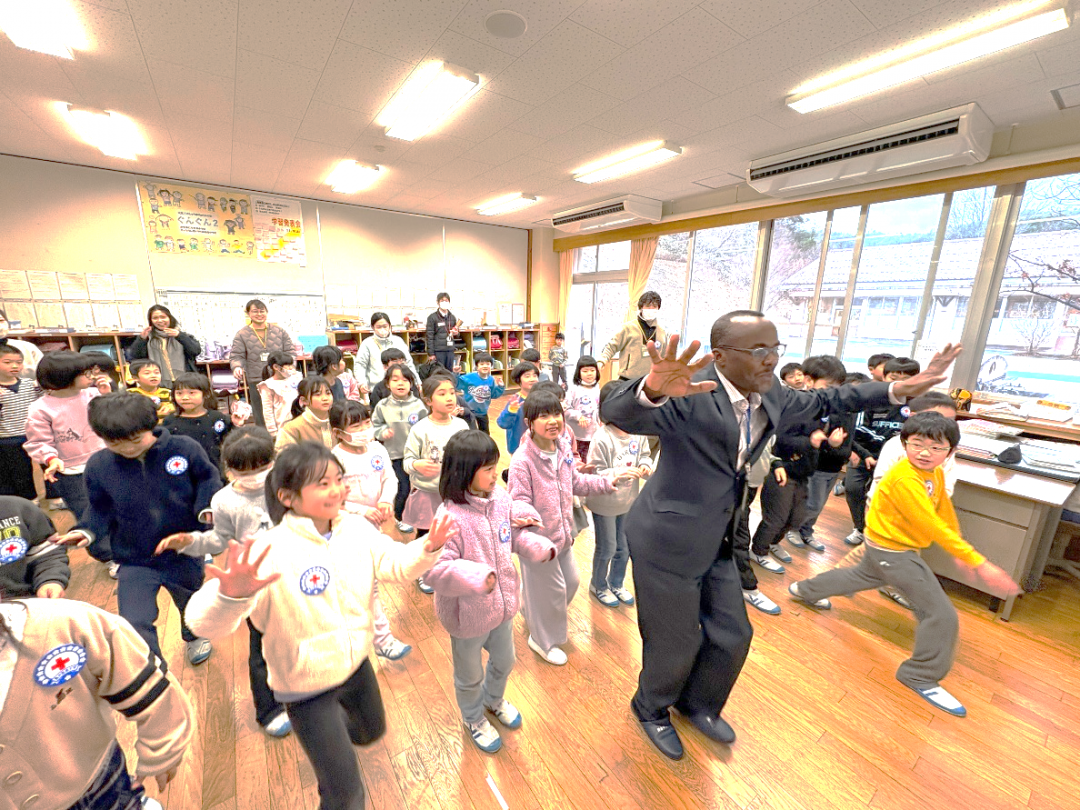
Rwanda Red Cross project officer having cultural exchange with children in Tottori through dance © JRCS